Security Scanner
Getting Started with Security Scanner
What is Security Scanner?
Security Scanner is a tool used to automatically identify vulnerabilities and security risks within your systems, applications, or infrastructure. It helps organizations proactively detect weaknesses and take corrective actions before they can be exploited.
With Security Scanner, you can:
- Identify vulnerabilities – Detect security issues across systems
- Assess risk levels – Classify findings based on severity
- Monitor scan results – Track completed and failed scans
- Improve security posture – Take action on identified risks
Risk type
Each finding is categorized based on its severity level:
- Low – Minor issues with limited impact
- Medium – Moderate vulnerabilities requiring attention
- High – Critical vulnerabilities that need immediate action
Scan status
Each scan is assigned a status to indicate its execution result:
- Completed – Scan finished successfully and results are available
- Error – Scan failed or encountered issues during execution
What you see in the overview
The Security Scanner overview provides key information such as:
- Scan name / target – System or asset being scanned
- Risk type – Severity of detected vulnerabilities
- Scan status – Completed or Error
- Findings summary – Number of issues detected
- Last scan date – Most recent scan execution
Tip
Prioritize fixing High risk findings first, especially from scans with Completed status. For scans with Error, investigate and rerun them to ensure no vulnerabilities are missed.
Dashboard Vulnerability
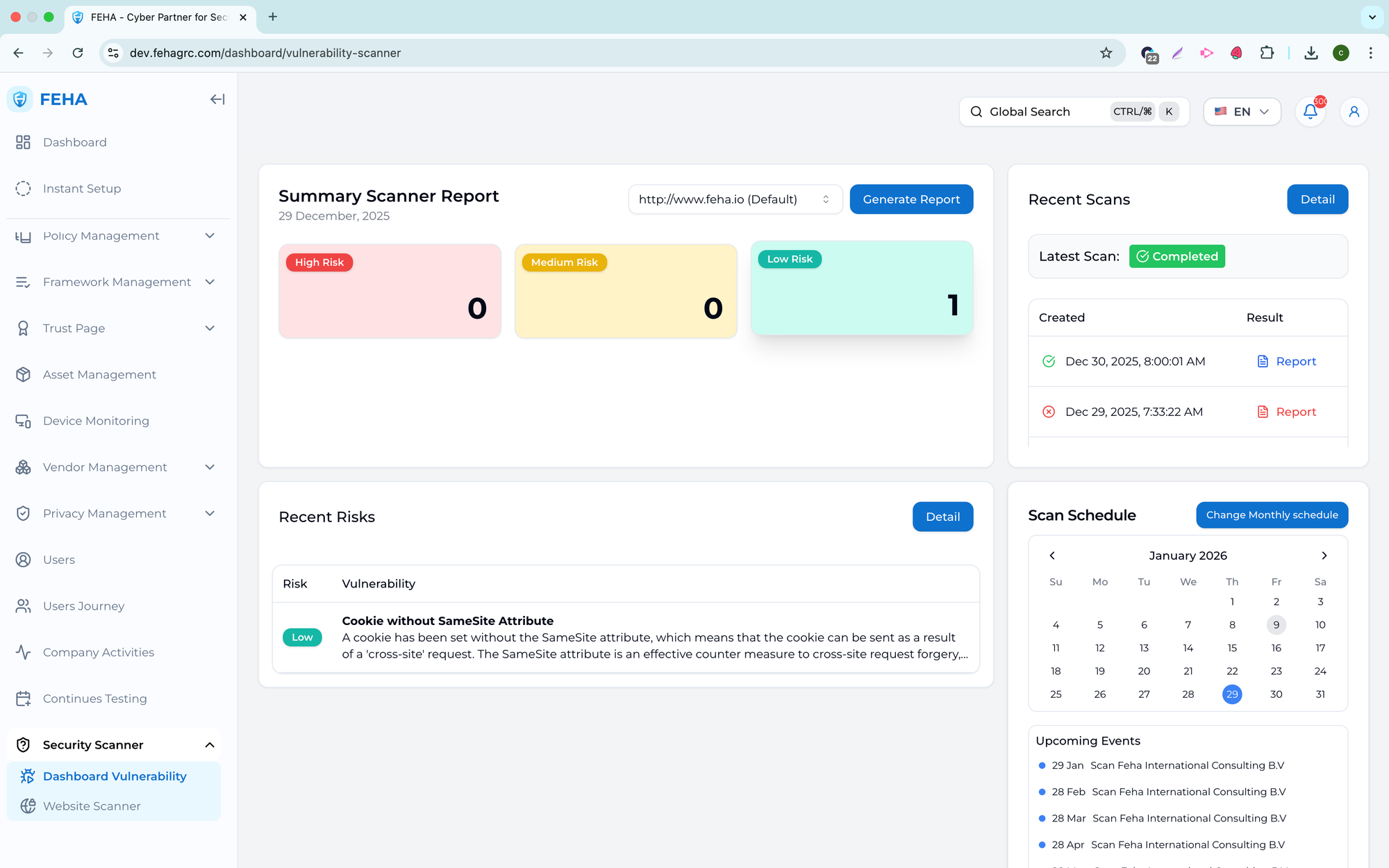
The Dashboard Vulnerability submenu offers an overview of website scan results, including detected risks, scan history, and generated reports to support ongoing vulnerability monitoring and remediation.
Generating a Vulnerability Report
This section outlines how to generate a report from an existing scan result.
- Open the Dashboard Vulnerability page.
- Select a website that has completed a scan.
- Select Generate Report.
- Review the PDF preview containing the scan results.
Note: Generated reports reflect vulnerabilities identified at the time of the scan.
Viewing the Risk List
This section explains how to view risks detected in scan results.
- Open the Dashboard Vulnerability page.
- Select Details in the Recent Risks section.
- Review the list of risks detected during scans.
Viewing the Scan List
This section explains how to view your scan history.
- Open the Dashboard Vulnerability page.
- Select Details in the Recent Scans section.
- Review the list of completed scans.
Changing Scan Frequency
This section explains how to change the scan schedule.
- Open the Dashboard Vulnerability page.
- Select Change Biweekly Schedule.
- Select the desired frequency in the Change Scan Frequency modal.
- Review the automatically scheduled scan time.
Note: Schedule changes will apply to future scans.
Viewing Existing Reports
This section explains how to view previously generated reports.
- Open the Dashboard Vulnerability page.
- Select Details in the Recent Scans section.
- Review the list of completed scans.
- Select Report in the relevant scan row to view the corresponding report.
Website Scanner
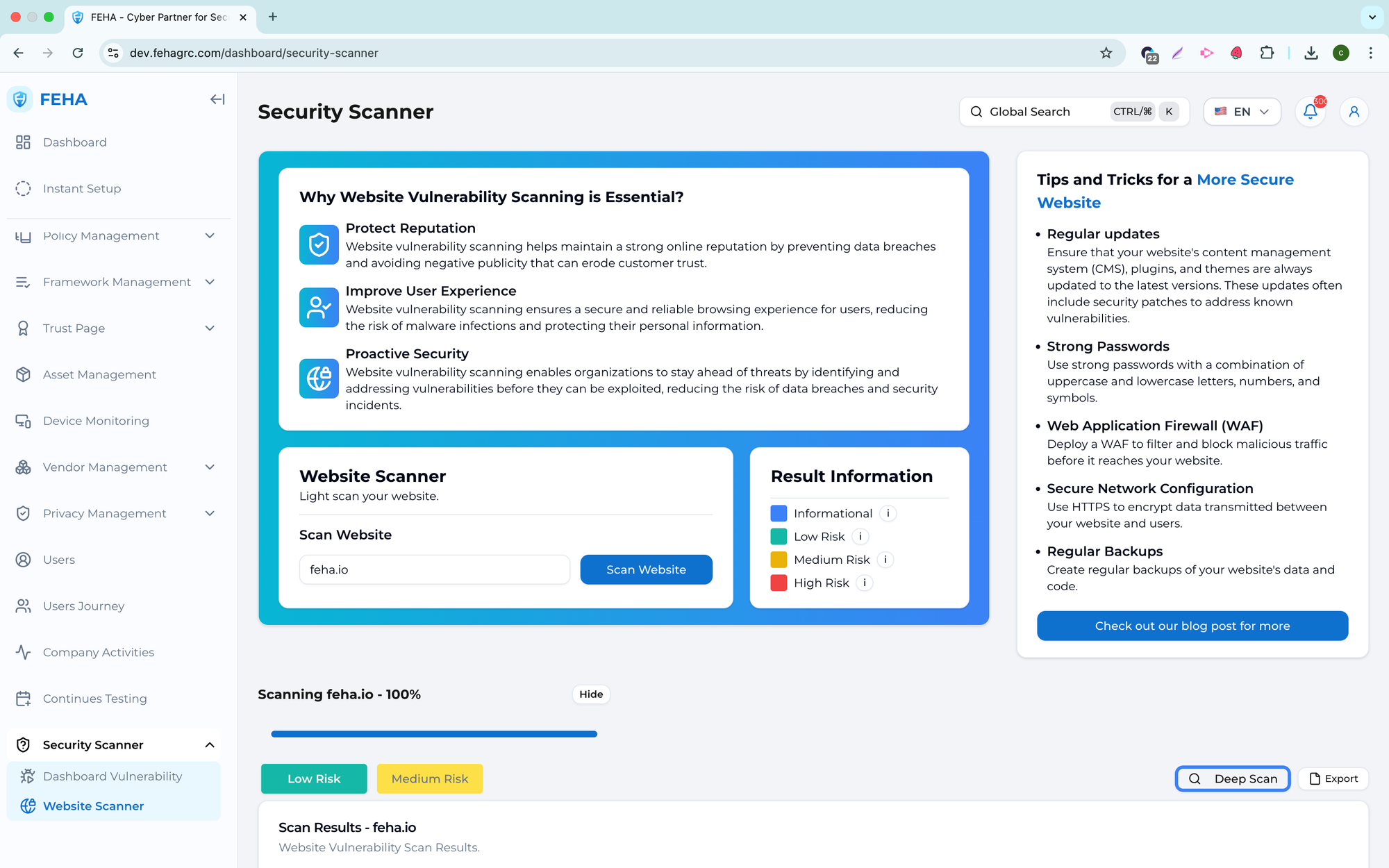
The Website Scanner submenu scans websites for potential security vulnerabilities. It offers domain scanning, risk review, deep scan requests, and scan result export.
Scanning a Website
Follow these steps to perform a website scan.
- Open the Website Scanner page.
- Enter the domain in the Enter Your Domain field.
- Select Scan Website.
- Wait until the list of detected risks is displayed.
Viewing URL Details
Follow these steps to view detailed information for a specific URL.
- Open the Website Scanner page.
- Enter the domain in the Enter Your Domain field.
- Select Scan Website.
- Wait until the list of detected risks is displayed.
- Select Detail URL in the relevant risk row.
Sending a Deep Scan Request
Follow these steps to request a deep website scan.
- Open the Website Scanner page.
- Enter the domain in the Enter Your Domain field.
- Select Scan Website.
- Wait until the list of detected risks is displayed.
- Select Deep Scan.
- Complete the deep scan request form.
- Select Submit.
Note: Deep scans may take additional processing time.
Exporting Scan Results
Follow these steps to export scan results.
- Open the Website Scanner page.
- Enter the domain in the Enter Your Domain field.
- Select Scan Website.
- Wait until the list of detected risks is displayed.
- Select Export.
- Review the downloaded CSV file in your local storage.
Viewing Blog Content
Follow these steps to access related blog content.
- Open the Website Scanner page.
- Select Check Out Our Blog Post for more information.
- Review the blog content displayed.